When you hear the term “noise pollution,” what comes to mind? Is it the roar of jet planes flying overhead, police sirens blaring, or an 80’s hair metal band? Noise is defined as unwanted or unpleasant sound. While some irritating noises may be relatively quiet, the ones that bother us most tend to be the loudest. What most people don’t realize is that noise—especially high-decibel noise—impacts our health.
Noise is not typically thought of as a disease-causing factor, but it can actually trigger a range of negative effects on physical health and overall mental well-being. Many areas of our lives are disrupted, including sleep, focus, communication, and leisure activities.
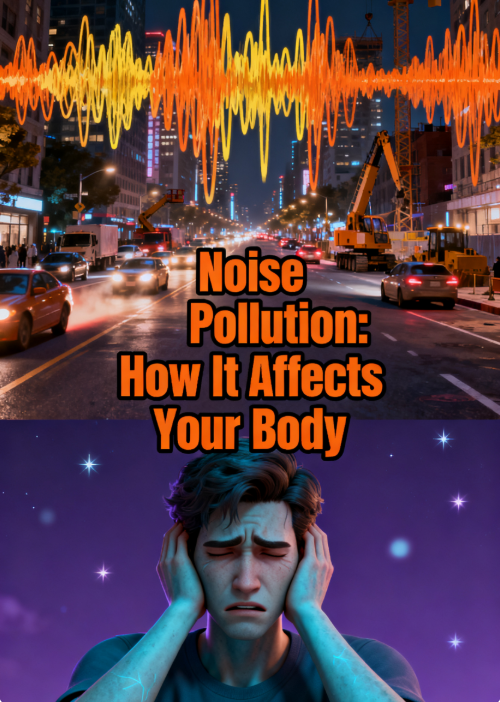
An article published in the Southern Medical Journal even drew a comparison between “second-hand noise” and second-hand smoke. It elaborated on this analogy by stating: “Second-hand noise is an unwanted airborne pollutant generated by others; it is imposed on us without consent, often against our will, and in many cases, we have no control over its timing, location, or volume.”
So how exactly does noise harm us? The World Health Organization (WHO) has categorized the adverse health effects of noise pollution into seven types:
- Hearing Impairment
- Disruption of Verbal Communication
- Sleep Disturbances
- Cardiovascular Disorders
- Mental Health Issues
- Reduced Task Performance
- Negative Social Behavior and Irritation Reactions
The first two effects may seem obvious, but others—such as impacts on the cardiovascular system—might come as a surprise. Let’s take a closer look at why these effects occur and what we can do to address them.
Noise and Heart Health
Several recent studies—including one conducted by the Harvard T.H. Chan School of Public Health and Boston University School of Public Health—have linked exposure to aircraft noise to an increased risk of stroke, coronary heart disease, and cardiovascular disease. So how does noise affect the heart?
In short, the brain often interprets noise as a danger signal. These signals trigger the body’s stress response, prompting the release of various hormones. These hormones cause blood pressure to spike, heart rate to increase, and even suppress immune system function. Over time, these repeated stress responses take a toll on the cardiovascular system. Additionally, sleep loss and irritation caused by noise can elevate stress levels, another risk factor for heart disease.
Even if someone isn’t consciously bothered by noise or has learned to “tune it out,” noise still affects them. For example, we continue to “hear” sounds while sleeping—they are simply processed subconsciously. Even without waking up, our bodies react by releasing stress hormones.
Take a minute to listen… you’ll likely notice many sounds you’ve trained yourself to ignore. These are the very sounds that may be damaging your body.

Noise and Diabetes
One less widely known effect of noise is its potential connection to diabetes. Danish researchers conducted a large-scale study on the long-term impacts of road traffic noise. They found that noise from busy roads and highways increases the risk of developing type 2 diabetes. Specifically, each 10-decibel increase in road noise was associated with an 8-11% higher risk. Researchers believe noise may influence diabetes development by disrupting sleep (or preventing deep sleep cycles) or by increasing stress through irritation.
Noise and Children
The effects of noise on children have been studied in greater depth than other groups. Children are particularly vulnerable to the adverse effects of noise pollution. Theoretically, they have not yet developed adequate coping mechanisms to deal with noise disturbances. For instance, studies show that children living in noisy households are more likely to experience delayed cognitive and language development. Noise also impairs children’s learning, reading abilities, problem-solving skills, motivation, academic performance, and social-emotional growth.
Other Issues
Concerns also exist regarding the psychological impacts of noise exposure. Irritation and stress caused by noise contribute to a range of other problems, such as mood swings, reduced performance, poor concentration, argumentativeness, anxiety, nausea, and headaches. Researchers note that the elderly, children, and individuals unfamiliar with the local language are particularly affected.
While noise is not considered a direct cause of mental health disorders, it is thought to accelerate and worsen the progression of underlying mental conditions. Noise may induce or exacerbate neurosis, hysteria, and psychosis.
As you can see, noise pollution is a significant issue—perhaps more so than you previously realized. While there is no perfect solution, there are many steps we can take to reduce noise in our lives and better protect our health.
Home
detail
Noise Pollution: How It Affects Your Body
2025-10-31T14:52:48
When you hear the term “noise pollution,” what comes to mind? Is it the roar of jet planes flying overhead, police sirens blaring, or an 80’s hair metal band? Noise is defined as unwanted or unpleasant sound. While some irritating noises may be relatively quiet, the ones that bother us most tend to be the loudest. What most people don’t realize is that noise—especially high-decibel noise—impacts our health.
Noise is not typically thought of as a disease-causing factor, but it can actually trigger a range of negative effects on physical health and overall mental well-being. Many areas of our lives are disrupted, including sleep, focus, communication, and leisure activities.
An article published in the Southern Medical Journal even drew a comparison between “second-hand noise” and second-hand smoke. It elaborated on this analogy by stating: “Second-hand noise is an unwanted airborne pollutant generated by others; it is imposed on us without consent, often against our will, and in many cases, we have no control over its timing, location, or volume.”
So how exactly does noise harm us? The World Health Organization (WHO) has categorized the adverse health effects of noise pollution into seven types:
- Hearing Impairment
- Disruption of Verbal Communication
- Sleep Disturbances
- Cardiovascular Disorders
- Mental Health Issues
- Reduced Task Performance
- Negative Social Behavior and Irritation Reactions
The first two effects may seem obvious, but others—such as impacts on the cardiovascular system—might come as a surprise. Let’s take a closer look at why these effects occur and what we can do to address them.
Noise and Heart Health
Several recent studies—including one conducted by the Harvard T.H. Chan School of Public Health and Boston University School of Public Health—have linked exposure to aircraft noise to an increased risk of stroke, coronary heart disease, and cardiovascular disease. So how does noise affect the heart?
In short, the brain often interprets noise as a danger signal. These signals trigger the body’s stress response, prompting the release of various hormones. These hormones cause blood pressure to spike, heart rate to increase, and even suppress immune system function. Over time, these repeated stress responses take a toll on the cardiovascular system. Additionally, sleep loss and irritation caused by noise can elevate stress levels, another risk factor for heart disease.
Even if someone isn’t consciously bothered by noise or has learned to “tune it out,” noise still affects them. For example, we continue to “hear” sounds while sleeping—they are simply processed subconsciously. Even without waking up, our bodies react by releasing stress hormones.
Take a minute to listen… you’ll likely notice many sounds you’ve trained yourself to ignore. These are the very sounds that may be damaging your body.
Noise and Diabetes
One less widely known effect of noise is its potential connection to diabetes. Danish researchers conducted a large-scale study on the long-term impacts of road traffic noise. They found that noise from busy roads and highways increases the risk of developing type 2 diabetes. Specifically, each 10-decibel increase in road noise was associated with an 8-11% higher risk. Researchers believe noise may influence diabetes development by disrupting sleep (or preventing deep sleep cycles) or by increasing stress through irritation.
Noise and Children
The effects of noise on children have been studied in greater depth than other groups. Children are particularly vulnerable to the adverse effects of noise pollution. Theoretically, they have not yet developed adequate coping mechanisms to deal with noise disturbances. For instance, studies show that children living in noisy households are more likely to experience delayed cognitive and language development. Noise also impairs children’s learning, reading abilities, problem-solving skills, motivation, academic performance, and social-emotional growth.
Other Issues
Concerns also exist regarding the psychological impacts of noise exposure. Irritation and stress caused by noise contribute to a range of other problems, such as mood swings, reduced performance, poor concentration, argumentativeness, anxiety, nausea, and headaches. Researchers note that the elderly, children, and individuals unfamiliar with the local language are particularly affected.
While noise is not considered a direct cause of mental health disorders, it is thought to accelerate and worsen the progression of underlying mental conditions. Noise may induce or exacerbate neurosis, hysteria, and psychosis.
As you can see, noise pollution is a significant issue—perhaps more so than you previously realized. While there is no perfect solution, there are many steps we can take to reduce noise in our lives and better protect our health.
I Love Cereal. Here’s How to Choose One That Isn’t Just Candy in a Box.
2025-10-02T18:12:45
A High School Student Earned Over $2 Million in Two Years from a Single YouTube Channel
2025-08-14T14:14:39