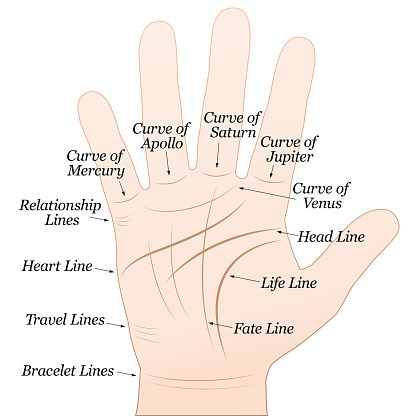
Palmistry, the ancient art of reading hands, offers a fascinating way to uncover insights about someone’s personality, relationships, and emotional tendencies. Whether you’re meeting someone new or simply curious about yourself, analyzing the lines, shapes, and features of the hand can reveal clues about love, attachment, and interpersonal dynamics. Below is a clear and comprehensive guide to the fundamentals of palmistry, with a special focus on interpreting signs related to romance and relationships.
Which Hand to Read?
One of the first questions in palmistry is: Which hand should you read? The answer is both, but it depends on the context.
Palmists distinguish between the dominant hand and the non-dominant hand. For right-handed people, the right hand is the dominant hand, and the left is the non-dominant hand. For left-handed individuals, the reverse is true. Here’s how they differ:
- Non-dominant hand: Reflects inherited traits, potential, and characteristics you’re born with.
- Dominant hand: Shows how those traits have evolved through life experiences and personal growth.
Significant differences between the lines or markings on the two hands suggest that a person has actively worked on self-development, shaping their character beyond their innate tendencies.
Hand Size
The size of a person’s hand relative to their body offers insights into their personality. Generally:
- Larger hands: Indicate someone who spends more time thinking than acting, often introspective or analytical.
- Smaller hands: Suggest a more action-oriented individual who acts quickly with less overthinking.
Hand Shapes
Hand shapes are categorized into four elemental types—Air, Earth, Fire, and Water—each revealing distinct personality traits and approaches to relationships:
- Air Hands: Square palm, long fingers, and fine, clear lines. These individuals are intellectual, sociable, and thrive on mental stimulation. In love, they prioritize emotional and intellectual connection, often needing variety and change to stay engaged.
- Earth Hands: Square palm, short fingers, thick skin, and deep, clear lines. These people are practical, grounded, and closely tied to nature. As partners, they are reliable, straightforward, and dependable.
- Fire Hands: Long palm, short fingers, full and prominent lines, and warm, taut skin. Fire types are adventurous and action-driven. In relationships, they are confident, proactive, and passionate.
- Water Hands: Long palm, slender fingers, numerous fine lines (not always distinct), and soft, moist skin. These individuals are creative, emotional, and sensitive. In love, they are nurturing, vulnerable, and value deep emotional bonds.
Palm and Finger Measurements
Beyond elemental types, palm and finger proportions provide further insights. This branch of palmistry, known as chirognomy, examines hand and finger shapes, including spade-shaped, square, psychic, or knotted forms. Here are key guidelines:
- Square Palm: Vertical and horizontal measurements are roughly equal.
- Long Palm: Vertical length exceeds horizontal width.
- Long Fingers: Middle finger is at least three-quarters the length of the palm’s height.
- Short Fingers: Middle finger is less than three-quarters the palm’s height.
The Thumb
The thumb offers clues about adaptability and loyalty:
- Flexibility: A flexible thumb suggests an easygoing, adaptable personality, while a stiff thumb indicates stubbornness or rigidity.
- Thumb “Waist”: A narrowing at the base of the thumb (near the first phalange) points to tact and diplomacy in relationships.
- Thumb Length: Longer thumbs are associated with strong character and loyalty to others and oneself, while shorter thumbs may indicate less steadfastness.
Palm Lines
The palm features major lines, minor lines, and fine lines, each contributing to a person’s character profile. Numerous fine lines suggest a complex, sensitive personality that’s easily influenced by external factors. Fewer fine lines indicate a straightforward, uncomplicated nature.
Major Lines
Most palms feature three prominent lines, each with specific significance:
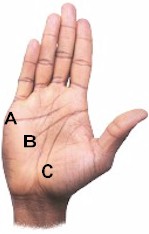
- Heart Line: The horizontal line ending near point A (typically at the top of the palm). This line governs emotions and is key for those seeking insights into love. A higher heart line indicates passion but sometimes jealousy. A straight heart line crossing the palm suggests strong emotional control. A heart line curving upward toward the Jupiter finger (index finger) reflects warmth, empathy, and deep affection in relationships. Crosses or breaks in the heart line may point to periods of heartbreak or emotional turmoil.
- Head Line: The horizontal line near point B (mid-palm). This line reflects intellectual capacity and decision-making. The gap (if any) between the head line’s starting point and the life line’s starting point reveals a person’s cautiousness. A close connection between the two lines suggests caution or timidity, while a wider gap indicates confidence and a willingness to take risks.
- Life Line: A curved line extending from near the thumb to point C (between the thumb and index finger). In relationships, a wide life line that leaves ample space for the Mount of Venus (see below) suggests generosity and openness in love. A life line closer to the thumb indicates a more reserved approach to giving time and energy.
Minor Lines
The Line of Attachment (sometimes called the marriage line) appears just above the heart line, near point A. A faint, shallow line suggests less serious relationships, while a long, clear line indicates a lasting, happy commitment or marriage. Multiple deep lines point to significant relationships, with the lowest line representing earlier connections in life.
Mounts
The palm features raised areas called mounts, each associated with a planet and specific traits. For love and relationships, the Mount of Venus—located near the thumb, within the curve of the life line—is particularly significant.
- A plump, firm Mount of Venus suggests a strong desire for pleasure and a robust romantic drive.
- A soft or flat Mount of Venus indicates lower romantic energy.
- Prominent horizontal lines on the mount reflect strong charisma in relationships.
- A grid of fine lines suggests emotional complexity, with a tendency toward moodiness or worry that may frustrate partners.
- A triangular shape on the mount may hint at potential infidelity, while a crescent (moon) shape indicates powerful allure.
Final Thoughts
Palmistry offers a unique lens into understanding love, relationships, and personality through the lines, shapes, and features of the hand. By examining both hands, their proportions, and key markings like the heart line or Mount of Venus, you can uncover insights into emotional tendencies and romantic compatibility. While palmistry is an art, not a science, it’s a fun and engaging way to explore human connections and spark meaningful conversations about love.
Home
detail
Love in Your Palm: The Basics of Palmistry
2025-09-09T14:32:37
Palmistry, the ancient art of reading hands, offers a fascinating way to uncover insights about someone’s personality, relationships, and emotional tendencies. Whether you’re meeting someone new or simply curious about yourself, analyzing the lines, shapes, and features of the hand can reveal clues about love, attachment, and interpersonal dynamics. Below is a clear and comprehensive guide to the fundamentals of palmistry, with a special focus on interpreting signs related to romance and relationships.
Which Hand to Read?
One of the first questions in palmistry is: Which hand should you read? The answer is both, but it depends on the context.
Palmists distinguish between the dominant hand and the non-dominant hand. For right-handed people, the right hand is the dominant hand, and the left is the non-dominant hand. For left-handed individuals, the reverse is true. Here’s how they differ:
- Non-dominant hand: Reflects inherited traits, potential, and characteristics you’re born with.
- Dominant hand: Shows how those traits have evolved through life experiences and personal growth.
Significant differences between the lines or markings on the two hands suggest that a person has actively worked on self-development, shaping their character beyond their innate tendencies.
Hand Size
The size of a person’s hand relative to their body offers insights into their personality. Generally:
- Larger hands: Indicate someone who spends more time thinking than acting, often introspective or analytical.
- Smaller hands: Suggest a more action-oriented individual who acts quickly with less overthinking.
Hand Shapes
Hand shapes are categorized into four elemental types—Air, Earth, Fire, and Water—each revealing distinct personality traits and approaches to relationships:
- Air Hands: Square palm, long fingers, and fine, clear lines. These individuals are intellectual, sociable, and thrive on mental stimulation. In love, they prioritize emotional and intellectual connection, often needing variety and change to stay engaged.
- Earth Hands: Square palm, short fingers, thick skin, and deep, clear lines. These people are practical, grounded, and closely tied to nature. As partners, they are reliable, straightforward, and dependable.
- Fire Hands: Long palm, short fingers, full and prominent lines, and warm, taut skin. Fire types are adventurous and action-driven. In relationships, they are confident, proactive, and passionate.
- Water Hands: Long palm, slender fingers, numerous fine lines (not always distinct), and soft, moist skin. These individuals are creative, emotional, and sensitive. In love, they are nurturing, vulnerable, and value deep emotional bonds.
Palm and Finger Measurements
Beyond elemental types, palm and finger proportions provide further insights. This branch of palmistry, known as chirognomy, examines hand and finger shapes, including spade-shaped, square, psychic, or knotted forms. Here are key guidelines:
- Square Palm: Vertical and horizontal measurements are roughly equal.
- Long Palm: Vertical length exceeds horizontal width.
- Long Fingers: Middle finger is at least three-quarters the length of the palm’s height.
- Short Fingers: Middle finger is less than three-quarters the palm’s height.
The Thumb
The thumb offers clues about adaptability and loyalty:
- Flexibility: A flexible thumb suggests an easygoing, adaptable personality, while a stiff thumb indicates stubbornness or rigidity.
- Thumb “Waist”: A narrowing at the base of the thumb (near the first phalange) points to tact and diplomacy in relationships.
- Thumb Length: Longer thumbs are associated with strong character and loyalty to others and oneself, while shorter thumbs may indicate less steadfastness.
Palm Lines
The palm features major lines, minor lines, and fine lines, each contributing to a person’s character profile. Numerous fine lines suggest a complex, sensitive personality that’s easily influenced by external factors. Fewer fine lines indicate a straightforward, uncomplicated nature.
Major Lines
Most palms feature three prominent lines, each with specific significance:
- Heart Line: The horizontal line ending near point A (typically at the top of the palm). This line governs emotions and is key for those seeking insights into love. A higher heart line indicates passion but sometimes jealousy. A straight heart line crossing the palm suggests strong emotional control. A heart line curving upward toward the Jupiter finger (index finger) reflects warmth, empathy, and deep affection in relationships. Crosses or breaks in the heart line may point to periods of heartbreak or emotional turmoil.
- Head Line: The horizontal line near point B (mid-palm). This line reflects intellectual capacity and decision-making. The gap (if any) between the head line’s starting point and the life line’s starting point reveals a person’s cautiousness. A close connection between the two lines suggests caution or timidity, while a wider gap indicates confidence and a willingness to take risks.
- Life Line: A curved line extending from near the thumb to point C (between the thumb and index finger). In relationships, a wide life line that leaves ample space for the Mount of Venus (see below) suggests generosity and openness in love. A life line closer to the thumb indicates a more reserved approach to giving time and energy.
Minor Lines
The Line of Attachment (sometimes called the marriage line) appears just above the heart line, near point A. A faint, shallow line suggests less serious relationships, while a long, clear line indicates a lasting, happy commitment or marriage. Multiple deep lines point to significant relationships, with the lowest line representing earlier connections in life.
Mounts
The palm features raised areas called mounts, each associated with a planet and specific traits. For love and relationships, the Mount of Venus—located near the thumb, within the curve of the life line—is particularly significant.
- A plump, firm Mount of Venus suggests a strong desire for pleasure and a robust romantic drive.
- A soft or flat Mount of Venus indicates lower romantic energy.
- Prominent horizontal lines on the mount reflect strong charisma in relationships.
- A grid of fine lines suggests emotional complexity, with a tendency toward moodiness or worry that may frustrate partners.
- A triangular shape on the mount may hint at potential infidelity, while a crescent (moon) shape indicates powerful allure.
Final Thoughts
Palmistry offers a unique lens into understanding love, relationships, and personality through the lines, shapes, and features of the hand. By examining both hands, their proportions, and key markings like the heart line or Mount of Venus, you can uncover insights into emotional tendencies and romantic compatibility. While palmistry is an art, not a science, it’s a fun and engaging way to explore human connections and spark meaningful conversations about love.