What does science say about flying dragons and fire-breathing beasts? Believe it or not, real-life versions of flying and fire-spewing dragons could plausibly exist in nature.
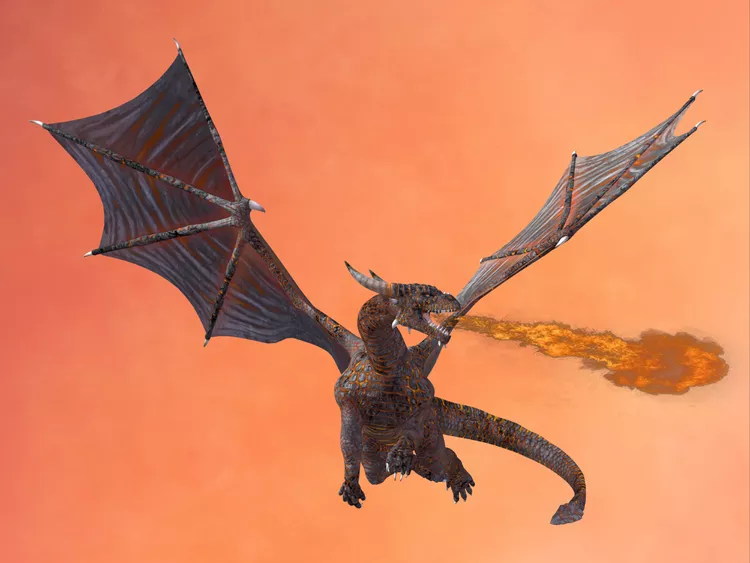
In mythology, many dragons soar through the skies and exhale flames. (CoreyFord / Getty Images)
Key Takeaways
- Massive flying dragons once existed, such as the Quetzalcoatlus with a wingspan reaching up to 36 feet.
- Real-life flying dragons, like the Draco lizard, use wing-like flaps to glide through the air.
- Fire-breathing is theoretically possible with the right chemicals, similar to how bombardier beetles eject boiling-hot liquids.
You might have heard that dragons are purely mythical creatures. After all, flying, fire-breathing reptiles couldn’t possibly exist in reality, right? While no fire-spewing dragons have been discovered yet, the fossil record does reveal lizard-like creatures capable of flight. Even today, some dragon-like animals might be spotted in the wild. Let’s explore the science behind winged flight and the potential mechanisms for dragons to breathe fire.
How Large Could Flying Dragons Be?
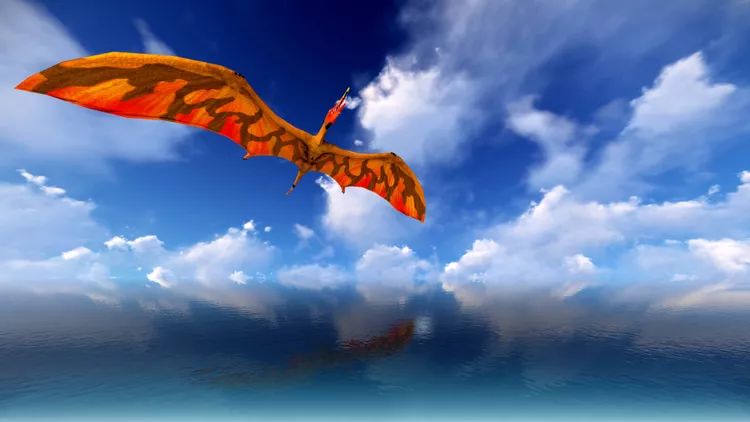
Quetzalcoatlus had a wingspan of about 15 meters and weighed around 500 pounds.
Scientists widely agree that modern birds evolved from flying dinosaurs, so there’s no debate about whether dragons could fly. The real question is whether they could grow large enough to prey on humans or livestock. The answer? Absolutely—they once did!
The Quetzalcoatlus northropi from the Late Cretaceous period is one of the largest known flying animals. Estimates of its size vary, but even conservative figures place its wingspan at 11 meters (36 feet) and its weight at around 200 to 250 kilograms (440 to 550 pounds). In other words, it was roughly the mass of a modern tiger—and tigers are certainly capable of taking down a human or a goat.
Several theories explain why modern birds aren’t as massive as prehistoric dinosaurs. Some scientists suggest that the energy required to maintain feather growth limits their size. Others point to changes in Earth’s climate and atmospheric composition as key factors influencing body size evolution.
Meet Modern Real-Life Flying Dragons
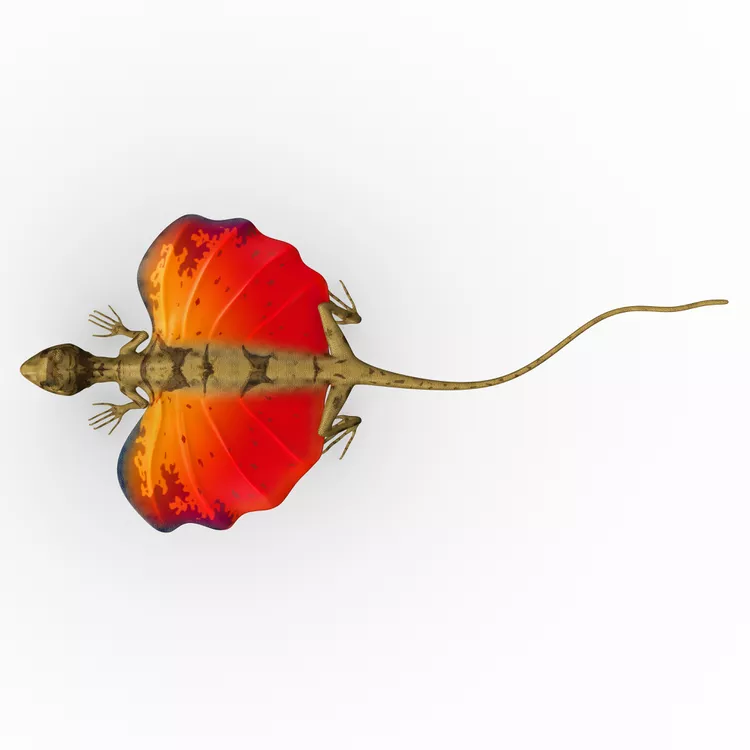
The Draco lizard is a small flying dragon native to Asia.
While ancient dragons might have been large enough to snatch a sheep or human, today’s dragons primarily feed on insects, with occasional birds and small mammals. These contemporary lizards are known as agamids, belonging to the Agamidae family. This group includes domesticated species like the bearded dragon and Chinese water dragon, as well as wild members of the Draco genus.
Species in the Draco genus (Draco spp.) are true “flying” dragons—they’re masters of gliding. These lizards flatten their limbs and extend wing-like flaps to soar up to 60 meters (200 feet). They use their tails and neck flaps (dewlaps) for stability and to control their descent. You can find these living flying dragons in South Asia, where they’re relatively common. The largest ones measure only about 20 centimeters (7.9 inches) long, so there’s no need to worry about becoming prey.
Dragons Can “Fly” Without Wings

The paradise tree snake (Chrysopelea paradisi) can glide up to 100 meters between trees.
European dragons are often depicted as massive winged behemoths, while Asian dragons resemble serpents with legs. Most of us think of snakes as ground-dwellers, but some can “fly”—meaning they glide impressive distances through the air. How far? These snakes can stay airborne for the length of a football field or twice that of an Olympic swimming pool! Species in the Chrysopelea genus (Chrysopelea spp.) achieve this by flattening their bodies and undulating to generate optimal lift, allowing them to “fly” up to 100 meters (330 feet). Researchers have found that the ideal gliding angle for these snakes is 25 degrees, with the head angled upward and the tail downward.
Theoretically, wingless dragons couldn’t achieve powered flight, but they could glide long distances. If such a creature could store lighter-than-air gases, it might even master true flight.
How Dragons Could Breathe Fire
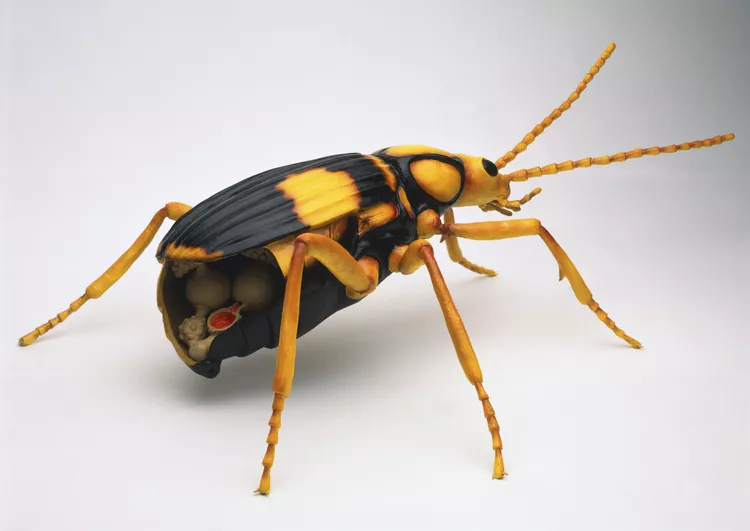
A model of a bombardier beetle in black and yellow, with yellow legs. A cross-section shows poison glands and venom reservoirs, an explosion chamber filled with red liquid, and one-way valves.
To date, no fire-breathing animals have been discovered. However, it’s not biologically impossible. Bombardier beetles (family Carabidae) store hydroquinone and hydrogen peroxide in their abdomens, which they eject when threatened. These chemicals mix in the air, triggering an exothermic reaction that sprays an irritating, boiling-hot liquid at the aggressor.
Consider this: Living organisms constantly produce flammable, reactive compounds and catalysts. Even humans inhale more oxygen than we consume. Hydrogen peroxide is a common metabolic byproduct, acids aid in digestion, and methane is a flammable gas produced during digestion. Catalase enzymes can accelerate chemical reactions.
A dragon could store these necessary chemicals separately until needed, then forcibly expel them and ignite the mixture chemically or mechanically. Mechanical ignition could be as simple as crushing a piezoelectric crystal to generate a spark. Piezoelectric materials, like flammable chemicals, already exist in animals—for example, in tooth enamel, dentin, dry bone, and tendons.
Thus, fire-breathing is definitely plausible. While it hasn’t been observed yet, that doesn’t mean no species has evolved this ability. A fire-breathing creature might even expel flames from its anus or a specialized structure in its mouth.
But That’s Not a Dragon!
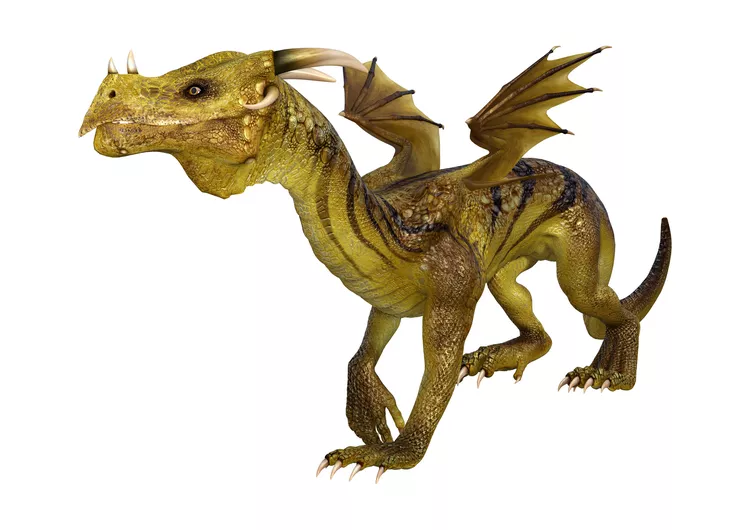
This dragon would need magic, not science, to fly.
The heavily armored dragons depicted in movies—complete with thick scales, spines, horns, and other bony protrusions—are almost certainly legendary. Such features would weigh the creature down too much for practical flight. However, if your ideal dragon has diminutive wings, rest assured that science hasn’t uncovered all the answers. After all, scientists only figured out how bumblebees fly in 2001.
Ultimately, whether dragons exist, fly, devour humans, or breathe fire depends on your definition of a “dragon.”
Key Points
- Flying “dragons” still exist today and are documented in the fossil record—they’re not just figments of imagination.
- Strictly speaking, wingless dragons can’t fly, but they could glide long distances without violating physics.
- Fire-breathing remains unknown in the animal kingdom, but it’s theoretically feasible. Many organisms produce flammable compounds that could be stored, released, and ignited via chemical reactions or mechanical sparks.
Home
detail
Could Dragons Really Fly and Breathe Fire? Here’s the Science
2025-09-09T14:44:43
What does science say about flying dragons and fire-breathing beasts? Believe it or not, real-life versions of flying and fire-spewing dragons could plausibly exist in nature.
In mythology, many dragons soar through the skies and exhale flames. (CoreyFord / Getty Images)
Key Takeaways
- Massive flying dragons once existed, such as the Quetzalcoatlus with a wingspan reaching up to 36 feet.
- Real-life flying dragons, like the Draco lizard, use wing-like flaps to glide through the air.
- Fire-breathing is theoretically possible with the right chemicals, similar to how bombardier beetles eject boiling-hot liquids.
You might have heard that dragons are purely mythical creatures. After all, flying, fire-breathing reptiles couldn’t possibly exist in reality, right? While no fire-spewing dragons have been discovered yet, the fossil record does reveal lizard-like creatures capable of flight. Even today, some dragon-like animals might be spotted in the wild. Let’s explore the science behind winged flight and the potential mechanisms for dragons to breathe fire.
How Large Could Flying Dragons Be?
Quetzalcoatlus had a wingspan of about 15 meters and weighed around 500 pounds.
Scientists widely agree that modern birds evolved from flying dinosaurs, so there’s no debate about whether dragons could fly. The real question is whether they could grow large enough to prey on humans or livestock. The answer? Absolutely—they once did!
The Quetzalcoatlus northropi from the Late Cretaceous period is one of the largest known flying animals. Estimates of its size vary, but even conservative figures place its wingspan at 11 meters (36 feet) and its weight at around 200 to 250 kilograms (440 to 550 pounds). In other words, it was roughly the mass of a modern tiger—and tigers are certainly capable of taking down a human or a goat.
Several theories explain why modern birds aren’t as massive as prehistoric dinosaurs. Some scientists suggest that the energy required to maintain feather growth limits their size. Others point to changes in Earth’s climate and atmospheric composition as key factors influencing body size evolution.
Meet Modern Real-Life Flying Dragons
The Draco lizard is a small flying dragon native to Asia.
While ancient dragons might have been large enough to snatch a sheep or human, today’s dragons primarily feed on insects, with occasional birds and small mammals. These contemporary lizards are known as agamids, belonging to the Agamidae family. This group includes domesticated species like the bearded dragon and Chinese water dragon, as well as wild members of the Draco genus.
Species in the Draco genus (Draco spp.) are true “flying” dragons—they’re masters of gliding. These lizards flatten their limbs and extend wing-like flaps to soar up to 60 meters (200 feet). They use their tails and neck flaps (dewlaps) for stability and to control their descent. You can find these living flying dragons in South Asia, where they’re relatively common. The largest ones measure only about 20 centimeters (7.9 inches) long, so there’s no need to worry about becoming prey.
Dragons Can “Fly” Without Wings
The paradise tree snake (Chrysopelea paradisi) can glide up to 100 meters between trees.
European dragons are often depicted as massive winged behemoths, while Asian dragons resemble serpents with legs. Most of us think of snakes as ground-dwellers, but some can “fly”—meaning they glide impressive distances through the air. How far? These snakes can stay airborne for the length of a football field or twice that of an Olympic swimming pool! Species in the Chrysopelea genus (Chrysopelea spp.) achieve this by flattening their bodies and undulating to generate optimal lift, allowing them to “fly” up to 100 meters (330 feet). Researchers have found that the ideal gliding angle for these snakes is 25 degrees, with the head angled upward and the tail downward.
Theoretically, wingless dragons couldn’t achieve powered flight, but they could glide long distances. If such a creature could store lighter-than-air gases, it might even master true flight.
How Dragons Could Breathe Fire
A model of a bombardier beetle in black and yellow, with yellow legs. A cross-section shows poison glands and venom reservoirs, an explosion chamber filled with red liquid, and one-way valves.
To date, no fire-breathing animals have been discovered. However, it’s not biologically impossible. Bombardier beetles (family Carabidae) store hydroquinone and hydrogen peroxide in their abdomens, which they eject when threatened. These chemicals mix in the air, triggering an exothermic reaction that sprays an irritating, boiling-hot liquid at the aggressor.
Consider this: Living organisms constantly produce flammable, reactive compounds and catalysts. Even humans inhale more oxygen than we consume. Hydrogen peroxide is a common metabolic byproduct, acids aid in digestion, and methane is a flammable gas produced during digestion. Catalase enzymes can accelerate chemical reactions.
A dragon could store these necessary chemicals separately until needed, then forcibly expel them and ignite the mixture chemically or mechanically. Mechanical ignition could be as simple as crushing a piezoelectric crystal to generate a spark. Piezoelectric materials, like flammable chemicals, already exist in animals—for example, in tooth enamel, dentin, dry bone, and tendons.
Thus, fire-breathing is definitely plausible. While it hasn’t been observed yet, that doesn’t mean no species has evolved this ability. A fire-breathing creature might even expel flames from its anus or a specialized structure in its mouth.
But That’s Not a Dragon!
This dragon would need magic, not science, to fly.
The heavily armored dragons depicted in movies—complete with thick scales, spines, horns, and other bony protrusions—are almost certainly legendary. Such features would weigh the creature down too much for practical flight. However, if your ideal dragon has diminutive wings, rest assured that science hasn’t uncovered all the answers. After all, scientists only figured out how bumblebees fly in 2001.
Ultimately, whether dragons exist, fly, devour humans, or breathe fire depends on your definition of a “dragon.”
Key Points
- Flying “dragons” still exist today and are documented in the fossil record—they’re not just figments of imagination.
- Strictly speaking, wingless dragons can’t fly, but they could glide long distances without violating physics.
- Fire-breathing remains unknown in the animal kingdom, but it’s theoretically feasible. Many organisms produce flammable compounds that could be stored, released, and ignited via chemical reactions or mechanical sparks.